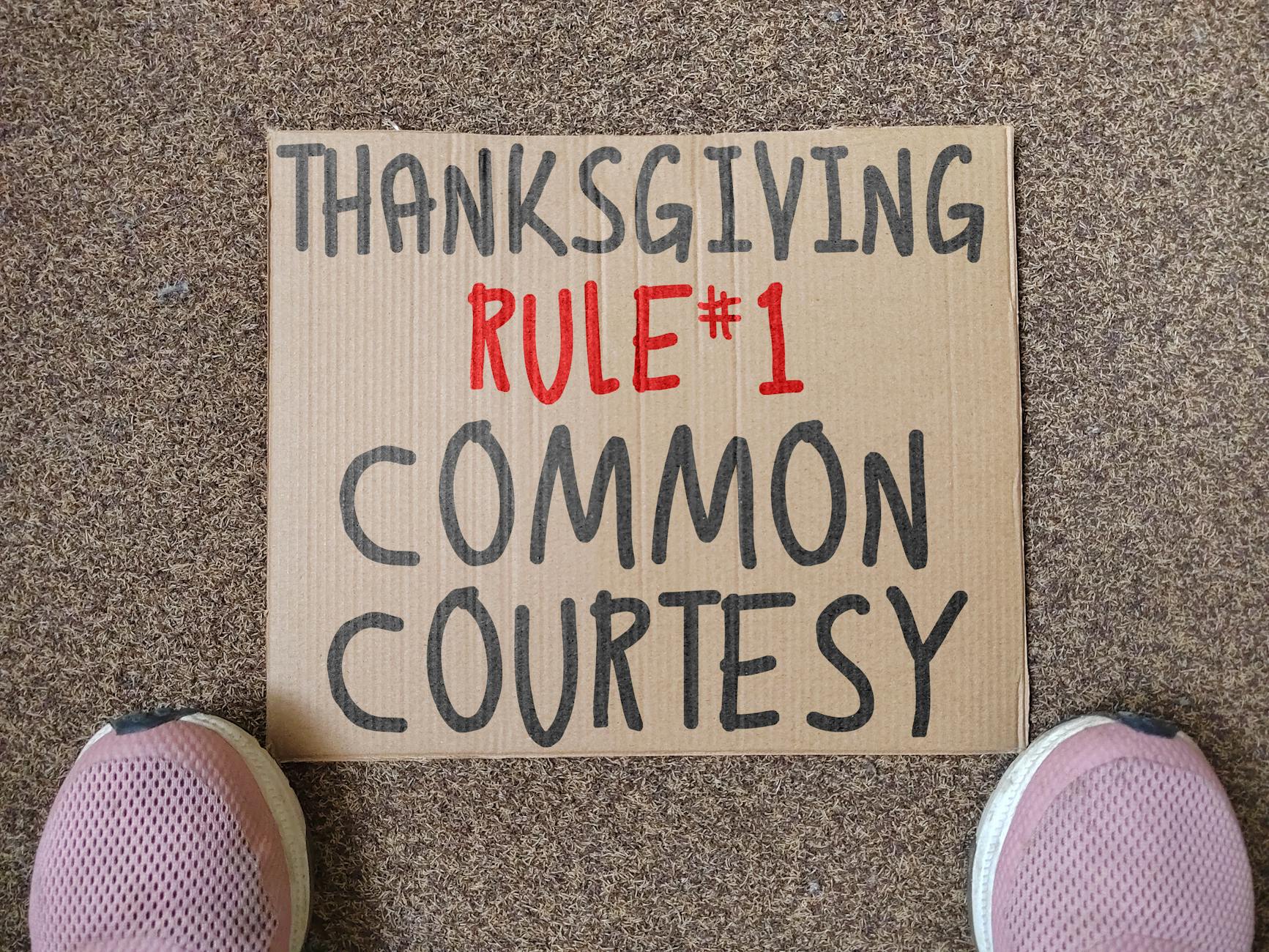
If your dinner table looks anything like mine, you may relate to this snapshot from last week:
- One child standing two inches from my face, telling a story at full volume.
- Another child with the chair five feet away from the table, leaning on elbows, eating rice with fingers while talking with a mouth full.
- Meanwhile, another has feet on the table and may or may not belch without saying excuse me.
And I’m (supposedly) preparing these same children for Thanksgiving dinner with grandparents, cousins, and cloth napkins?
The truth is: ALL parents struggle with teaching table manners. But Thanksgiving gives us the perfect reason—and deadline—to practice some skills that will serve our kids for a lifetime.
Think of this email not as “more things to correct,” but as a kind and realistic framework for building table manners step by step—before the big meal and all year long.
A FAMILY FRAMEWORK FOR TABLE MANNERS
Let Them Help Create the Table
When kids help set the table, they feel ownership and pride.
Try this:
- Rotate who sets the table each night
- Let them pick napkin colors or create place cards
- Assign someone “Head of the Water Pitcher”
- Upgrade challenge: Teach them how to set a fancy table and fold napkins. Let YouTube do the teaching: “Fun napkin folding for kids” = 2 minutes well spent.
Practice Short Seated Meals Now
If your kids currently last 3 minutes in a chair… do NOT wait until Thanksgiving Day to practice. Start with:
- A 3–5 minute kitchen timer (“Let’s see if we can all stay seated until the bell!”)
- Praise effort, not perfection
- Add 1 minute per day
Model the Manners You Want
Kids learn more from watching us than from being told what to do. Mirror neurons, and all that! Ask your kids to see if they can catch you breaking any of these manners, and allow them to correct you. Drawing their attention to how you model good manners can be a powerful tool! And they love to correct us!
- Sitting up straight
- Elbows off the table
- Chewing with your mouth closed
- Swallowing before speaking
- No phones visible. Yes—even face down, research shows phones reduce connection.
Use a Clear, Calm Boundary
Instead of nagging, try one simple norm:
“At the table, we eat with polite behavior.
If you choose not to, you may leave the table and try again next meal.”
Not angry. Not dramatic. Just calm and consistent. It works for 3-year-olds and 13-year-olds.
THE TOP 10 TABLE MANNERS EVERY KID SHOULD KNOW
- Sit in your seat—not on your knees or feet
- Keep elbows off the table
- Use silverware unless food is meant to be eaten by hand
- Chew with your mouth closed
- Finish chewing before you speak.
- Ask politely: “Please pass the ___”
- Say “thank you” when served
- Take appropriate bites
- Stay seated until everyone is finished
- Ask to be excused
Print. Post. Practice. Celebrate progress.
KEEP THEM AT THE TABLE WITH CONVERSATION
The fastest way to lose kids at dinner is to bore them with, “So… how was school?” Instead, try these age-based prompts:
Ages 2–5
- “What animal do you wish could talk?”
- “Would you rather eat only purple food or only orange food?”
Ages 6–10
- “Who was kind to you today? Who were you kind to today?”
- “If you could rename Thanksgiving, what would you call it?”
Ages 11–14
- “What’s something adults don’t understand about being your age?”
- “What’s one thing you’re looking forward to this month?”
Ages 15–20
- “If you could teach one skill to the whole world, what would it be?”
- “What’s something you’ve changed your mind about this year?”
Want a printable version? Just reply—I’ll send it.
5 MISTAKES THAT SET KIDS UP TO STRUGGLE
- Letting kids graze all evening instead of gathering for one meal
- Expecting manners without teaching or modeling them
- Letting phones stay on the table
- Eating separate meals (kids at 5, adults at 7)
- Constantly correcting instead of setting expectations in advance
ONE LAST THING: BE AGE-REALISTIC
- Ages 2–4 will wiggle. Aim for exposure, not perfection.
- Ages 5–8 can sit 10–15 minutes with practice.
- Ages 9–12 can handle full manners with reminders.
- Ages 13+ can—and should—be expected to use adult manners.
If your teen slurps soup or talks with food falling out, don’t panic. Don’t shame. Just coach, model, and practice.
THE GOAL
Participation. Presence. Practice. Not perfection.
And maybe—just maybe—your child will surprise you this Thanksgiving by:
- Passing the rolls politely
- Staying seated the whole meal
- Saying “Thank you” to the host…. unprompted!
And that is something we’ll all be grateful for this Thanksgiving!
With you in it,
Peyten
Bowbend Recommends: The Ring Game
| The Ring Game Our kids love playing this game. By themselves. With a friend. Rotating in teams. Want something fun to bring to Thanksgiving this year? Try the ring game! Want more family-friendly game ideas? Check out our Resources on Bowbend’s website! |

Leave a Reply