(Sorry for the late post! )
Today is Christmas Day. For those of you who celebrate—Merry Christmas!
Our family is Christian, so today we’re celebrating the incredible truth that God came to us in Jesus to redeem us and this broken world. It’s really good news.
But this newsletter isn’t just for Christians. Because no matter what you believe, every parent is navigating the same challenge at some point: helping our kids handle peer pressure.
And oddly enough, a new holiday trend popping up around Atlanta has given us the perfect, low-stakes way to talk about it.
I posted about this on Instagram earlier this week (follow me @epdwilliams if you want parenting tips there too), but if you missed it, here’s the deeper dive.

A Street Full of Blow-Ups (and a Parenting Opportunity)
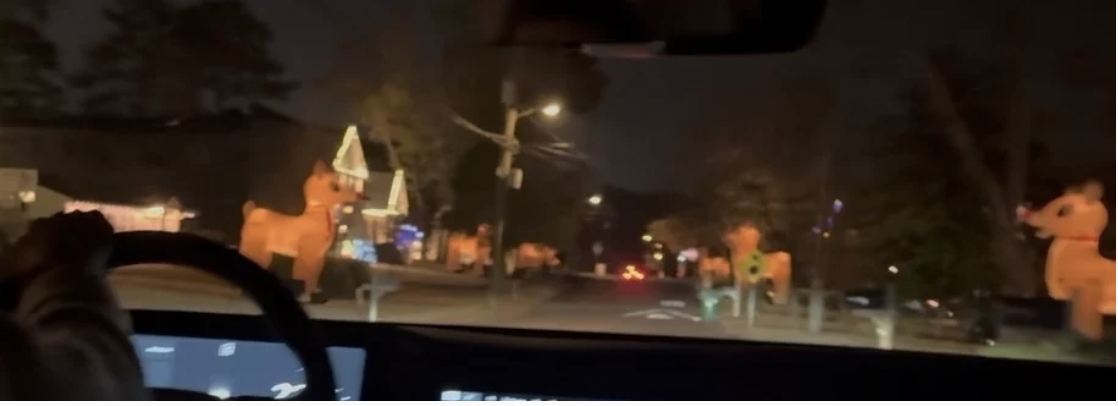
In our neighborhood, something new is happening. Entire streets are coordinating to put out the exact same holiday blow-up.
- Twenty-five giant gingerbread men.
- Fifteen larger-than-life snowmen.
- A whole block of identical elves.
Now—to be clear—I don’t judge anyone who loves blow-up decorations. Truly. To each their own.
But personally? I don’t like them. I’ve told my husband and kids for years: we are not a blow-up family. Ever.
Then this year, a message popped up in our neighborhood group chat:
“We should all order these!!!! Like the other neighborhoods are doing!”
(link included—to a very cute blow-up elf)
And I realized: this is peer pressure.
Not the dramatic, insidious version. The everyday version.
The Kind of Peer Pressure We Don’t Talk About Enough
When I was a kid, peer pressure talks were always about drugs, drinking, smoking, or sex. There was usually a bully or a “cool kid” pressuring someone else to do something obviously wrong.
That happens—but it’s only part of the story.
Most peer pressure is internal.
Our brains are wired for belonging.
We are motivated by a deep desire to matter and to fit in.
So when we see other people making the same choice—holiday decorations, shoes, clothes, trends, social media habits—it triggers something inside us:
Should I be doing that too?
It’s often not about someone forcing us. It’s about not wanting to be left out.
That’s the version we need to help our kids recognize.
How to Talk About Peer Pressure at Every Age
(Start small. Start now.)
For Kids Ages 2–5
Keep it simple and observational.
- “Look at all those blow-ups on the street! What do you think about that?”
- “How do you think people decided to do that?”
- “What about the people who decided not to?”
You’re not teaching a lesson—you’re planting awareness.
For Kids Ages 6–10
Begin adding perspective and empathy.
- “Why might someone choose not to get a blow-up?”
- “How do you think that person feels?”
- “How would you handle being the only house without one?”
This helps kids see that choices are shaped by values, resources, and priorities—not just popularity.
For Kids Ages 11–15
Now you can name it clearly.
- “Peer pressure isn’t just someone telling you what to do. It’s invitations. It’s trends. How do you decide what to join in on—and what not to?”
- “Are there things ‘everyone is doing’ that go against something you want or believe?”
- “What do you do when belonging feels like it’s at odds with who you want to be?”
These conversations matter before the stakes are high.
Bringing Values (and Faith) Into the Conversation
For families with a faith tradition, this is a beautiful moment to connect belief with daily life.
In our Christian home, we tell our kids that our lens is simple:
Love God and love others. Everything else hangs on that.
Can I love God and others without a street blow-up? Absolutely.
Can I do the same with one? Sure.
The point isn’t the decision—it’s how the decision is made.
And if you don’t have a faith tradition, the same principle still applies.
What values do you hold dear?
What kind of character do you want your children to develop?
That’s your baseline for teaching decision making and awareness of how to handle peer pressure.
This holiday season, as you drive around admiring lights and decorations, use the car time to sneak in some powerful teaching about belonging, values, and intentional choice.
With you in it—(even if I never get a blow-up decoration),
Peyten
PS. The best present you could get me this holiday season is forwarding this post to three people you love who might benefit and/or emailing me back with a topic you want to hear about. Thanks for being parents who care about developing character!
ALSO….

I am so excited to announce that I have a book coming out this winter/spring. It is called The Paradoxes of Parenting: Spiritual and Practical Wisdom for Everyday Parenting.
Leave a Reply