(Sorry for the late post!)
With the ringing in of a new year, Stan and I have a tradition that has become one of my favorites: a Williams Family Vision Casting Night.
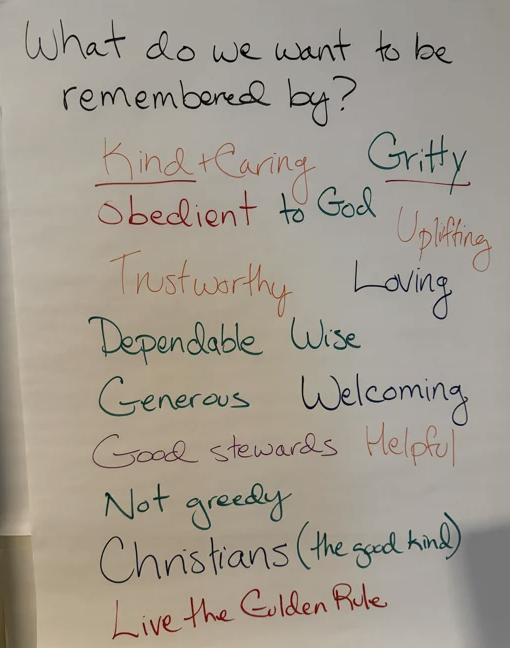
Tonight or tomorrow, we’ll order pizza (because years ago, one of our littlest proudly declared us “a pizza family”), Stan will pull out the flip-chart posters and color-coded markers, and we’ll gather around the fire—pizza in hand—to talk about our family and who we want to be.
This tradition started a few years ago thanks to Stan, and every year it grounds us. We don’t answer every single question on the posters, but we do revisit what we’ve talked about—to get on the same page and set direction for the year ahead.
I love this practice because it helps us be intentional, not reactive. It gives us a lens for the thousands of small decisions we’ll make in the coming year. And we do it together.

What I Mean When I Say “Raising Kids of Character”
When I think about raising kids of character, I don’t just mean “good kids.”
I think about kids who do the right thing even when it’s hard.
Kids who can choose—sometimes in a split second, under pressure—to love God and love others.
Kids who are bridge builders.
Kids who act with courage, empathy, and clarity when it would be easier to look away.
This year, I plan to reference (not read in full, but talk about) two articles a friend shared with me about the aftermath of the Bondi Beach attack and the extraordinary response that followed. One tells the story of an unarmed Muslim bystander who stepped in to disarm the attacker. The other describes how Jewish donors rallied to raise money for him afterward.
I want my kids to see a real, concrete picture of what character looks like: living in a way that recognizes the dignity, worth, and humanity of every person—including yourself.

Character Is Built in the Small Moments
Yes, character is revealed in the big moments. But it’s built in the small ones.
- In telling the truth about whether you actually made your bed.
- In apologizing to your sibling for calling them the s-word (“stupid”).
- In asking your parents how you can help.
- In obeying your teachers.
- In doing your homework—not just doing it, but doing it well.
- In waiting to eat the cookie until after dinner.
I want my kids to understand that character is formed over a lifetime.
Mistakes don’t mean they lack character or substance.
Mistakes reveal a gap in skills—and an opportunity to grow.
That’s the lens I want to bring into the new year.

How to Do This at Every Age
Kids Ages 2–5
Don’t do a big vision-casting meeting. Truly. It will drive you crazy.
Instead, take a night with your spouse, partner, or close friends and talk through questions like:
- What kind of family do we want to be?
- What do we value?
- How do we want to treat one another?
Then, live those answers out in small ways during family routines.
A little, often, is far better than one big dose.
Kids Ages 6–10
This is the perfect age.
- Divide up a few simple questions. Let each child ask one. Take turns answering as a family.
- Let kids write or draw the answers on paper.
They love being included—and they’re old enough to start seeing themselves as contributors to the family culture.
Kids Ages 11–15
Invite them into leadership.
- Let them help choose the questions for the year.
- Ask them to bring an article, story, or example of character to share.
- Have them help guide the conversation.
Whatever you do, remember: this kind of work happens little by little, over time.
Like water over rocks—slowly smoothing rough edges you didn’t even realize were there.
Let’s raise thriving kids of character—together—in 2026,
Peyten
Leave a Reply