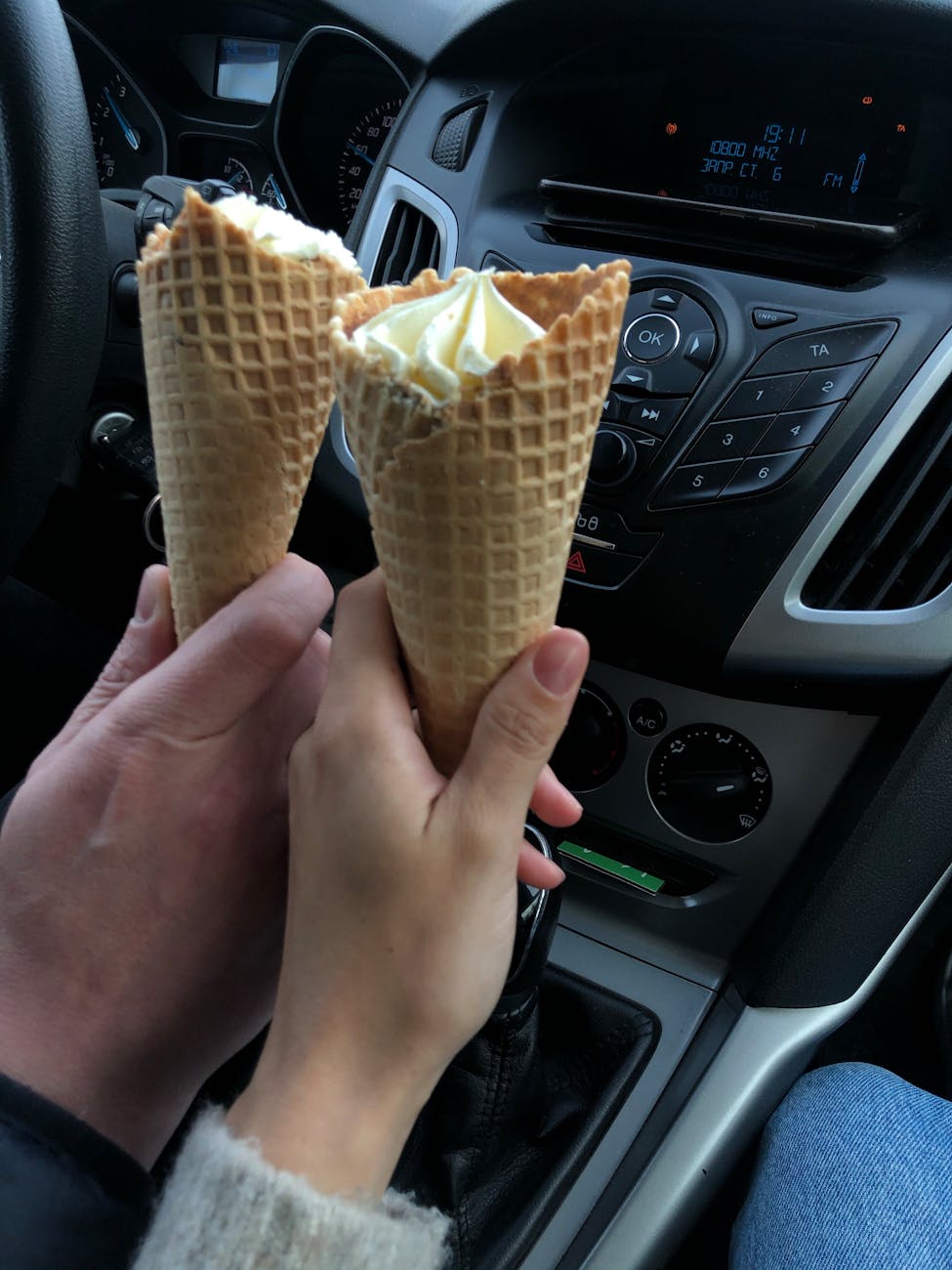
After picking up carpool one day, I spontaneously drove through the line at our favorite fast-food spot and ordered five simple ice cream cones.
Then, from the back seat I heard a whine: “Man! Can’t we get a milkshake?”
My head nearly exploded.
Entitlement! Ungratefulness!
I briefly imagined rolling down the window and sending all five cones sailing into the parking lot like a dramatic mom-mic-drop.
But instead, after a deep breath and a silent prayer, I turned around, handed back the first cone with a smile, and said,
“Oh, did I just hear you say, ‘Thank you for these delicious ice cream cones’? I thought so. But just in case I misheard…”
Then I coached them:
“All children receiving ice cream now say: Thank you for this delicious ice cream surprise, Mom/Ms. Williams.”
They grinned. They shouted their thanks and licked their ice cream cones. We moved on. No lecture, just a reset.
And as I pulled away, I realized: This is one way we grow gratitude—interrupting entitlement with kindness, coaching the words we want them to practice, and giving them another shot at getting it right.
It’s still possible to raise thankful kids in a world that over-delivers, overstimulates, and makes everything “on-demand.” But gratitude is not a personality trait—it’s a learned, repeated skill that grows through modeling, practice, and connection.
A FAMILY GUIDE TO GROWING GRATITUDE
Build the Pathways on Purpose
Neuroscience gives us good news: repetition wires the brain.
Every time we cue a child with, “What do you say?” or “Try that again with gratitude,” we aren’t being annoying—we’re strengthening neural pathways for appreciation.
So even if it feels like you’ve said “Say thank you” 4,000 times this week… it’s working. Keep going.
Try this:
- Use short gratitude scripts: “Thank you for ___.” “I appreciate that you ___.”
- Ask kids to practice again when entitlement shows up.
- Celebrate tiny improvements with warmth (“Nice catch remembering to say thank you!”).
Create Daily Moments That Point Toward Thankfulness
Kids become grateful by experiencing gratitude, not just hearing about it.
Try this:
- End the day with one “grateful for” moment.
- Choose one family ritual to anchor gratitude (weekly high/low, gratitude jar, three-things-at-dinner).
- Research on positive psychology consistently shows that noticing small daily gifts increases wellbeing and naturally reduces entitlement. When kids learn to spot good things, they feel more grounded—and less owed.
Model What You Hope to See
Children imitate what they observe, especially emotional tones.
Try this:
- Let them overhear you thanking the server, the neighbor, the sibling who handed you the remote.
- Narrate gratitude in real time: “I’m thankful for this quiet moment,” or “I appreciate how you helped without being asked.”
- When you slip into frustration or entitlement yourself, model a reset: “Oh—let me try that again with gratitude.”
Create Clear, Calm Expectations
Entitlement thrives when expectations are fuzzy or constantly shifting.
Try this:
- Use simple pre-teaching: “When someone gives us something, our job is to say thank you.”
- If gratitude disappears in the moment, gently pause and redo: “Let’s try that again.”
- Keep the tone warm—not sarcastic, not shaming.
Kids feel safe (and grateful!) when boundaries are predictable and kind.
5 COMMON MISSTEPS THAT ACCIDENTALLY GROW ENTITLEMENT
1. Doing too much without inviting contribution
When kids never help, gratitude has nothing to anchor itself to.
2. Trying to force grateful feelings
You can coach grateful words and behaviors—but feelings emerge from experience, not pressure.
3. Shaming kids when they forget
“You should be thankful!” “Do you know how lucky you are?”
Shame shuts down learning. Calm redirection rewires the brain.
4. Using rewards so often that generosity feels transactional
If kids expect a prize for every helpful moment, gratitude fades fast.
5. Rescuing kids from discomfort or boredom
When kids never wait, never share, never experience limits, entitlement sneaks in.
Reasonable boundaries are the soil where gratefulness grows. Don’t worry if your child occasionally forgets, complains, or acts entitled. That’s normal. You aren’t trying to eliminate entitlement entirely—you’re teaching your kids what to do when entitlement appears.
With you in it,
Peyten
PS. In the spirit of gratitude, I am so thankful for each one of you. Thank you for the work you’re doing every day to raise thriving kids of character. Thank you for the myriad ways you model for your kids what it means to be a good human. And thank you for reading and sharing this newsletter with the people you love. Every day you show up to parent, you are changing the world for the better. Thank you!
Leave a Reply