Back in September, Stan and I hosted a dinner party where ten of us gathered around my circular table. The topic: Artificial Intelligence and Parenting.
Not the hype.
Not the fear.
Not the headlines.
Just a group of thoughtful parents trying to figure out how to raise healthy, grounded, human kids in a world that’s changing faster than any of us can catch our breath.
AI is no longer something “out there.” Our kids are using it today—often before we know, and certainly before we’ve set guidelines. And that’s the tension: we want them to be independent, resourceful, and future-ready… but we also don’t want to outsource their thinking, creativity, or moral development to a robot.
This post is my attempt to capture the biggest themes from that night—and to help parents feel grounded, hopeful, and equipped.
1. Ethics, Honesty & The New “Homework Help”
“I asked my son if he used AI for his paper, and he said, ‘Mom, you used your phone to help me!’”
Our conversation sounded similar to the conversations I hear in faculty lounges across the country. How does AI fit in the classroom, with learning, with assessment, and homework? Where is it a positive tool and where is it replacing something essential?
- What counts as help, and what counts as cheating?
- How do we explain plagiarism in an era when AI can write a paragraph in three seconds?
- What is age-appropriate AI (the PG-13 question of our generation)?
AI isn’t inherently dishonest. But kids need a compass. They need the language of ethics. They need to understand attribution, effort, and integrity.
Not because AI is dangerous—but because character still matters.
2. Discernment: The Skill That Matters Most
Discernment—not memorization—is now the essential skill.
It used to be so easy to spot the fake photo, the doctored document, or the phishing email, but now….
- Is this true?
- Is this trustworthy?
- Who created it and why?
- Is this manipulative?
We’re living in a crisis of trust: media, institutions, journalism, politics.
AI didn’t cause that, but it magnifies it.
In fact, many of us wondered at dinner if the pendulum might swing back toward experts—publishers, encyclopedias, people who have earned trust over time.
Kids don’t need to know everything.
They need to know how to evaluate anything.
3. Prompting: The New Literacy
Prompting is becoming what typing was in the 90s—a required literacy.
Every parent in the room wanted to know:
- Are schools teaching prompting?
- How do we teach our kids to ask better questions?
- What does it look like to use AI as a partner, not a crutch?
Prompts shape thinking.
Thinking shapes habits.
Habits shape character.
If “math facts” were the skill of our generation, prompting may be the equivalent for theirs.
4. Patience, Grit & The Fear That Everything Is Becoming “Too Easy”
We worry:
If AI removes friction, will our kids stop building grit?
If AI makes creation instant, will they still learn perseverance?
One parent summed it up beautifully:
“We’re raising Amazon kids—they’ve never had to wait for anything.”
Boredom is still the wellspring of creativity.
Kids still need:
- Time to think
- Space to imagine
- Opportunities for productive struggle
- Patience before they’re allowed to use powerful tools
Even in an AI world, grit matters. Endurance matters. Slow thinking still matters.
We thought about how we, as parents, have an important opportunity to seize right now. Will we allow our children to have what they want, when they want it, personalized, and without effort?
Or will home be the one place where they wait, work, and be uncomfortable?
5. Safety, Surveillance & The Free-Range Kid Paradox
This part of the conversation took a turn into the deep waters:
We want our kids to be independent.
We also know the internet can be a firehose of:
- Pornography
- Suicide content
- Ways to circumvent restrictions
- Algorithms designed to addict
So how do we balance safety and independence?
We talked about having a conversation with our kids, “What do you think the age should be to use AI?”
Parents don’t need to track every click or become “big brother,” but we do need boundaries.
We also need to acknowledge that technology can increase loneliness, not solve it.
6. Teachers & Schools: What Changes?
Kids aren’t using AI for “cheating” as much as they’re using it for:
- personalized explanations
- learning at their pace
- generating ideas
- practicing new skills
Teachers are shifting from content-delivery to coaching.
Schools are figuring out filters, browser lockdowns, and honor codes.
Kids with school-issued devices may be using AI all day long.
We need to support teachers so they remain essential—not overshadowed by a tool that can “explain anything.”
7. Jobs & The Future of Work
Parents want to know: What jobs will still exist?
We talked about:
- coding jobs decreasing
- AI orchestration roles increasing
- the rise of the generalist
- the enduring importance of the trades (welding isn’t going away!)
- new roles emerging around data center power, cooling, and energy
The future is not “less human.”
It’s more human—just differently so.
8. Power, Infrastructure & The Physical World
AI isn’t magic; it’s physical.
We talked about:
- the new standard of data centers (“a small city”)
- power requirements
- cooling
- water
- small nuclear reactors
- robotic surgery
- environmental impacts
- economic impacts
AI is changing our expectations of speed and precision, but it’s also reminding us that the world still runs on electricity, steel, water, and engineers.
9. Human Connection: The Piece We Must Not Lose
AI can explain anything.
But it cannot replace:
- eye contact
- empathy
- belonging
- friendship
- human presence
The danger isn’t that AI becomes too human.
It’s that humans become less present.
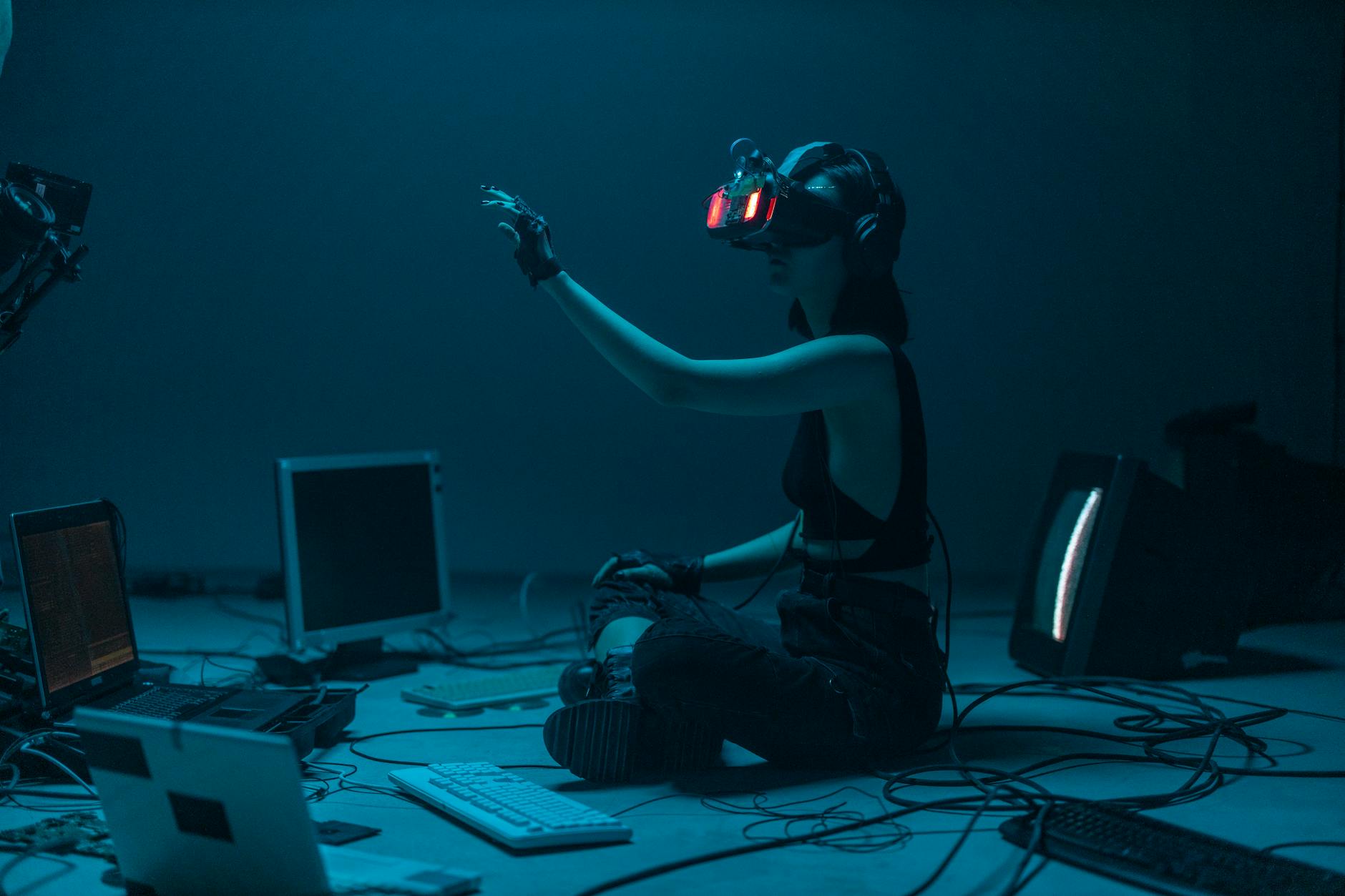
VR goggles came up. One parent asked, “Is this the next opioid for kids?”
The concern is real.
We have to protect the crucial piece of humanity—our kids’ sense of self, emotion, and connection.
10. Everyday Parenting Strategies (Real Tips from Real Parents)
These were some of the practical things parents around the table said they were trying:
- Turn off the Wi-Fi for free play
- Bring back a land line phone
- Confiscate devices as needed
- Coordinate Minecraft playdates with actual boundaries
- Prompt kids with: “If you won’t talk about your day, I’ll talk about mine”
- Ask your kids: “What do you hope to use AI for this year?”
Our mantra:
We don’t rely on AI. We use it when it’s helpful.
There’s a difference.
11. Creativity vs Consumption
AI makes creation instant, but creativity still requires boredom.
Unstructured time is becoming the most precious resource of childhood.
We want our kids to be creators, not just consumers.
AI can help—if used intentionally.
12. Generational Gaps & The Blockbuster Moment
Kids adapt instantly.
Adults… do not.
One parent joked that AI feels like “Blockbuster all over again.”
We don’t need to be experts.
We do need to stay in the mix.
Kids are better at some things, yes.
But they still need us for wisdom.
13. Regulation, Acceleration & The Global Race
Will the U.S. regulate AI?
Should it?
What about China?
How fast is too fast?
Nobody had answers. But we agreed:
Parents can’t wait for regulation.
We must lead with values now.
14. Future-Oriented Questions We’re All Wondering About
This list made everyone pause:
- Will our 1st graders go to college?
- What majors will even exist?
- Should adults take AI classes?
- How often are our kids using AI daily?
- Are we preparing kids to be generalists or specialists?
These questions aren’t fears—they’re invitations to think forward.
15. The Moral & Philosophical Layer
AI can mimic morality.
It cannot embody it.
You can tell ChatGPT to respond “as a Christian,” but it doesn’t believe.
It mirrors patterns—it doesn’t hold convictions.
Ethics and values must still come from humans.
And the question under all our conversations:
Are we raising critical thinkers?
Final Takeaways for Parents
Here is the distilled wisdom from our dinner:
- Teach prompting — so kids learn how AI thinks
- Value discernment over memorization
- Be patient — with the technology and with yourself
- Hold onto human connection
- Let kids be bored — creativity needs space
- A balanced, bounded approach works
- Kids may use AI better than us, but we must stay involved
- VR is powerful and potentially addictive
- Preserve the crucial piece of humanity
- AI can make life easier—but ease can be both a blessing and a curse
AI is here.
But so are we.
And parenting in this era isn’t about fear—it’s about formation.
Our kids don’t need a perfect roadmap.
They need grounded, wise, connected parents who stay curious and stay in the mix.
You’re already that parent.
And for the record, I used ChatGPT to write this post by uploading my notes. 🙂 It was that, or not publish till summer. #priorities
Leave a Reply